
What Defines a Globally Competitive Customized Reliable And Safe AGV/AMR Drive Unit Factory
SHANGHAI, SHANGHAI, CHINA, April 22, 2026 /EINPresswire.com/ -- The AGV and AMR market has grown into one of the most competitive segments in industrial automation. Procurement teams and system integrators now face a supplier landscape crowded with manufacturers claiming identical capabilities. Identifying a truly Customized Reliable And Safe AGV/AMR Drive Unit Factory — one that can back those claims with verified processes and measurable outcomes — demands a structured evaluation framework. The five questions below break down what that framework should look like, and how a Shanghai-based specialist with more than 22 years of engineering experience addresses each criterion in practice.
Q1: What Credentials Should a Globally Competitive AGV Drive Unit Manufacturer Actually Hold?
Credentials matter most when they require applicants to demonstrate sustained engineering output, not just submit documentation. In the AGV drive unit sector, meaningful designations include national high-tech enterprise status and specialist innovation recognitions — both of which demand ongoing R&D investment, verified patent portfolios, and measurable product innovation cycles as qualifying conditions.
Shanghai Plutools Automation Co., Ltd. holds both national high-tech enterprise status and recognition as a Specialized and Innovative Small Giant Enterprise. The company has accumulated more than 200 patent certifications across its product and process development. These are not ceremonial distinctions. Each designation requires documented evidence of engineering capability. Furthermore, a technical team of over 60 engineers supports product development across drive wheels, controllers, motors, component products, and magnetic navigation systems — a portfolio breadth that signals depth rather than narrow specialization. Credentials, however, are only meaningful when subsequent performance validates them.
Q2: Can a Single Factory Realistically Deliver Both Scale and Deep Customization?
This is one of the most common concerns among procurement engineers. High-volume factories tend to prioritize process standardization. Customization-focused operations, meanwhile, often struggle to maintain consistent throughput. Few manufacturers convincingly resolve both demands within a single facility.
Plutools operates a production facility spanning more than 10,000 square meters with an annual capacity of 100,000 units. Critically, this capacity runs alongside a Manufacturing Execution System that provides real-time production monitoring from raw material intake through to finished product dispatch. The system enables flexible production scheduling without sacrificing output predictability.
On the customization side, the evidence is specific. Low-temperature drive wheels incorporate material-level optimization and adaptive control systems for sub-zero operating environments. Explosion-proof variants integrate multiple protection technologies alongside intelligent safety monitoring and early warning functions — built to international standards for hazardous industrial zones. Lifting and rotating mechanisms achieve deep integration with AGV operating systems to support complex collaborative workflows. Altogether, more than 500 customized products are currently in active deployment. That figure confirms that scalable customization is an operational reality, not a catalog footnote.
Q3: How Do You Verify That a Drive Unit Is Truly Reliable Before It Reaches the Field?
Reliability statements without process transparency reduce to marketing language. The more useful question is: what specific verification steps does a manufacturer perform before authorizing shipment?
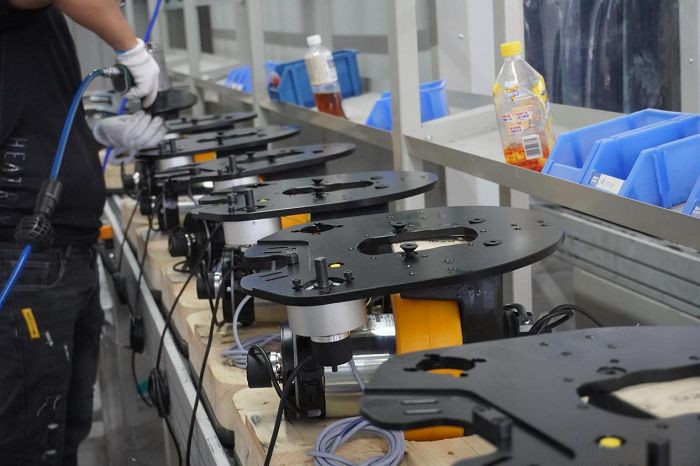
Plutools applies a four-layer production and validation chain. The precision machining workshop uses five-axis CNC machining centers alongside coordinate measuring machines achieving accuracy of plus or minus 0.01 millimeters. Gear tooth machining reaches ISO 5 level — a standard that supports component service lives exceeding 20,000 hours under heavy-load AGV conditions.
Assembly follows ISO 9001 standardized procedures. Key steps include laser calibration for motor-reducer coaxiality, dynamic brake clearance adjustment, encoder signal coupling verification, and torque sensor linear calibration. Every unit clears a 100% online inspection checkpoint. The result is a first-pass assembly success rate of 99.8% — a figure that reflects process discipline rather than selective sampling.
Before shipment, each product completes 12 performance validations. These include a 72-hour continuous full-load run at 150% impact load, thermal efficiency analysis confirming performance at or above 92%, IP65 protection verification, and noise measurement — no-load at or below 55 decibels and full-load at or below 68 decibels. Temperature cycling chambers operate between minus 30 and plus 70 degrees Celsius. Neutral salt spray testing runs for 1,000 hours. Taken together, these protocols represent a verification architecture designed to surface failure before deployment rather than after.
Q4: What Does It Actually Mean to Engineer Safety Into a Drive Unit System?
Safety in AGV applications is frequently discussed at the vehicle or system level. In practice, however, safety performance originates at the component level. A drive unit that fails unpredictably creates downstream consequences that no vehicle-level safety layer can fully compensate for.
Plutools embeds safety across multiple design layers. Electromagnetic brake systems provide controlled stopping during emergency conditions or unexpected power loss — a particularly critical function for heavy-load AGVs operating on inclined surfaces. Encoder feedback delivers continuous position and speed data, enabling precise navigation and synchronization with warehouse or manufacturing control systems.
For long-term durability, IP65 sealing and 1,000-hour salt spray resistance address the corrosive and particulate conditions common in industrial environments. In hazardous settings — petrochemical facilities, mining operations, and similar zones — explosion-proof drive wheels follow verified international standards and incorporate intelligent early warning monitoring. These safety features appear consistently across product lines rather than as selectively applied options. That consistency is significant. It indicates a design philosophy rather than a response to individual customer requests.
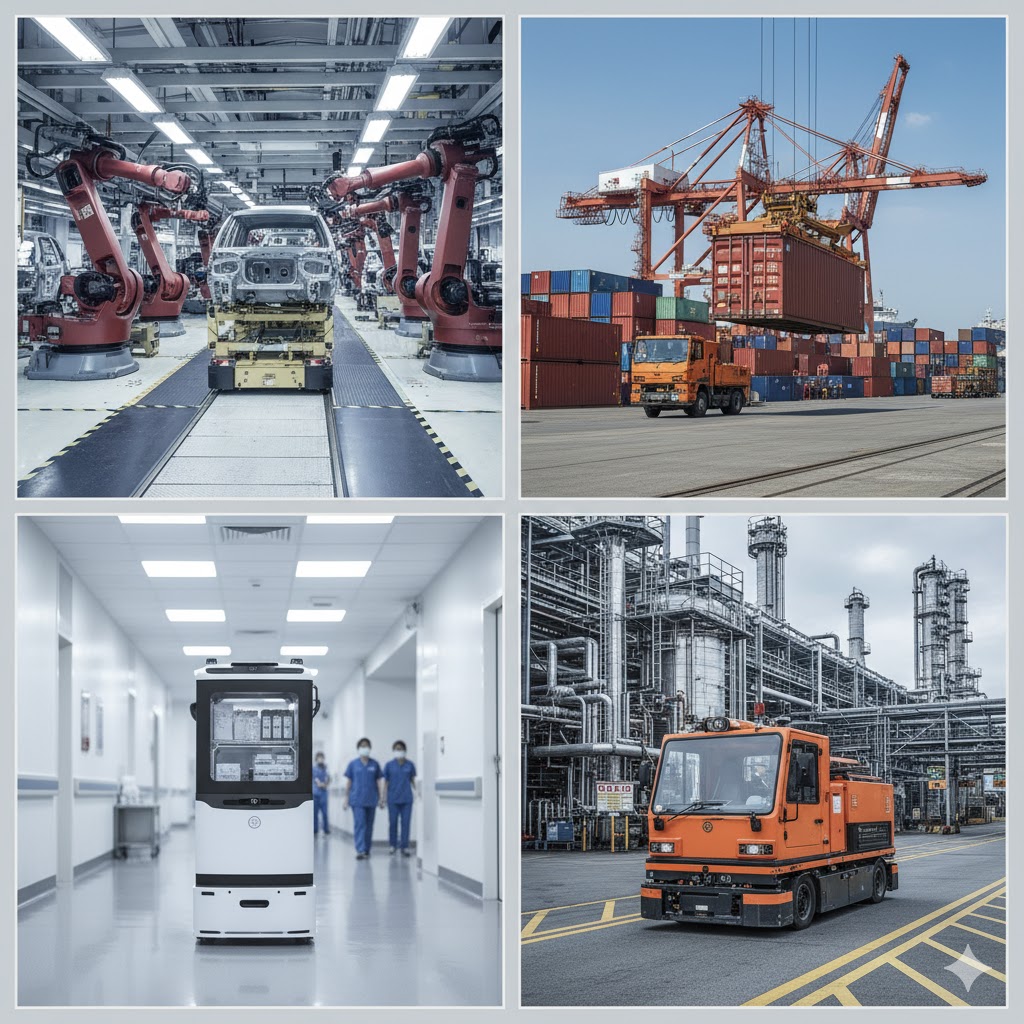
The application sectors where Plutools products operate reinforce why this matters. Automotive manufacturing, port terminal logistics, medical facility transport systems, and large-scale warehousing all involve environments where a component failure carries consequences beyond equipment downtime alone.
Q5: Can the Supplier Deliver Consistently at Global Scale Without Compromising Lead Time?
Engineering capability and customization depth create limited value if delivery performance is unpredictable. For global partnerships, supply chain consistency often determines whether a technically strong supplier becomes a long-term partner or a one-cycle vendor.
Plutools maintains a strategic supplier network of more than 100 core partners. Key component inventory turnover stays within a seven-day cycle. The global on-time order delivery rate exceeds 99.2%, sustained by full-process MES digital management. These metrics matter because they reflect system-level supply chain discipline rather than individual project performance.
The company's international expansion adds further context. In early 2026, Plutools welcomed its first international client factory delegation — a visiting group from India — marking a concrete step beyond domestic market operations. Looking ahead, the company is scheduled to exhibit at MODEX 2026 in Atlanta, United States, at Booth A7027. MODEX ranks among the logistics industry's most significant trade events globally. The planned participation reflects an active push to extend its supply chain infrastructure and technical engagement into international markets.
What Actually Defines a Globally Competitive AGV/AMR Drive Unit Factory?
The five questions above point toward a consistent answer. Global competitiveness in this category requires five interlocking capabilities: independently verified credentials backed by sustained R&D investment; demonstrated customization depth across extreme and non-standard application scenarios; a transparent, measurable, and multi-stage quality validation process; safety embedded at the component design level rather than applied as a system-level afterthought; and a supply chain with documented delivery performance at scale.
These criteria carry the most weight when evaluated simultaneously. A manufacturer strong across three dimensions but weak in two creates asymmetric operational risk — particularly for system integrators whose project timelines and downstream clients depend on component-level predictability. Plutools addresses each criterion with specific, traceable data rather than general assertions. For procurement engineers and system integrators evaluating AGV drive unit suppliers, that combination of verified depth and delivery consistency provides a substantive foundation for technical due diligence.
For further technical information and product specifications, visit https://www.plutools.com/.
Q1: What Credentials Should a Globally Competitive AGV Drive Unit Manufacturer Actually Hold?
Credentials matter most when they require applicants to demonstrate sustained engineering output, not just submit documentation. In the AGV drive unit sector, meaningful designations include national high-tech enterprise status and specialist innovation recognitions — both of which demand ongoing R&D investment, verified patent portfolios, and measurable product innovation cycles as qualifying conditions.
Shanghai Plutools Automation Co., Ltd. holds both national high-tech enterprise status and recognition as a Specialized and Innovative Small Giant Enterprise. The company has accumulated more than 200 patent certifications across its product and process development. These are not ceremonial distinctions. Each designation requires documented evidence of engineering capability. Furthermore, a technical team of over 60 engineers supports product development across drive wheels, controllers, motors, component products, and magnetic navigation systems — a portfolio breadth that signals depth rather than narrow specialization. Credentials, however, are only meaningful when subsequent performance validates them.
Q2: Can a Single Factory Realistically Deliver Both Scale and Deep Customization?
This is one of the most common concerns among procurement engineers. High-volume factories tend to prioritize process standardization. Customization-focused operations, meanwhile, often struggle to maintain consistent throughput. Few manufacturers convincingly resolve both demands within a single facility.
Plutools operates a production facility spanning more than 10,000 square meters with an annual capacity of 100,000 units. Critically, this capacity runs alongside a Manufacturing Execution System that provides real-time production monitoring from raw material intake through to finished product dispatch. The system enables flexible production scheduling without sacrificing output predictability.
On the customization side, the evidence is specific. Low-temperature drive wheels incorporate material-level optimization and adaptive control systems for sub-zero operating environments. Explosion-proof variants integrate multiple protection technologies alongside intelligent safety monitoring and early warning functions — built to international standards for hazardous industrial zones. Lifting and rotating mechanisms achieve deep integration with AGV operating systems to support complex collaborative workflows. Altogether, more than 500 customized products are currently in active deployment. That figure confirms that scalable customization is an operational reality, not a catalog footnote.
Q3: How Do You Verify That a Drive Unit Is Truly Reliable Before It Reaches the Field?
Reliability statements without process transparency reduce to marketing language. The more useful question is: what specific verification steps does a manufacturer perform before authorizing shipment?
Plutools applies a four-layer production and validation chain. The precision machining workshop uses five-axis CNC machining centers alongside coordinate measuring machines achieving accuracy of plus or minus 0.01 millimeters. Gear tooth machining reaches ISO 5 level — a standard that supports component service lives exceeding 20,000 hours under heavy-load AGV conditions.
Assembly follows ISO 9001 standardized procedures. Key steps include laser calibration for motor-reducer coaxiality, dynamic brake clearance adjustment, encoder signal coupling verification, and torque sensor linear calibration. Every unit clears a 100% online inspection checkpoint. The result is a first-pass assembly success rate of 99.8% — a figure that reflects process discipline rather than selective sampling.
Before shipment, each product completes 12 performance validations. These include a 72-hour continuous full-load run at 150% impact load, thermal efficiency analysis confirming performance at or above 92%, IP65 protection verification, and noise measurement — no-load at or below 55 decibels and full-load at or below 68 decibels. Temperature cycling chambers operate between minus 30 and plus 70 degrees Celsius. Neutral salt spray testing runs for 1,000 hours. Taken together, these protocols represent a verification architecture designed to surface failure before deployment rather than after.
Q4: What Does It Actually Mean to Engineer Safety Into a Drive Unit System?
Safety in AGV applications is frequently discussed at the vehicle or system level. In practice, however, safety performance originates at the component level. A drive unit that fails unpredictably creates downstream consequences that no vehicle-level safety layer can fully compensate for.
Plutools embeds safety across multiple design layers. Electromagnetic brake systems provide controlled stopping during emergency conditions or unexpected power loss — a particularly critical function for heavy-load AGVs operating on inclined surfaces. Encoder feedback delivers continuous position and speed data, enabling precise navigation and synchronization with warehouse or manufacturing control systems.
For long-term durability, IP65 sealing and 1,000-hour salt spray resistance address the corrosive and particulate conditions common in industrial environments. In hazardous settings — petrochemical facilities, mining operations, and similar zones — explosion-proof drive wheels follow verified international standards and incorporate intelligent early warning monitoring. These safety features appear consistently across product lines rather than as selectively applied options. That consistency is significant. It indicates a design philosophy rather than a response to individual customer requests.
The application sectors where Plutools products operate reinforce why this matters. Automotive manufacturing, port terminal logistics, medical facility transport systems, and large-scale warehousing all involve environments where a component failure carries consequences beyond equipment downtime alone.
Q5: Can the Supplier Deliver Consistently at Global Scale Without Compromising Lead Time?
Engineering capability and customization depth create limited value if delivery performance is unpredictable. For global partnerships, supply chain consistency often determines whether a technically strong supplier becomes a long-term partner or a one-cycle vendor.
Plutools maintains a strategic supplier network of more than 100 core partners. Key component inventory turnover stays within a seven-day cycle. The global on-time order delivery rate exceeds 99.2%, sustained by full-process MES digital management. These metrics matter because they reflect system-level supply chain discipline rather than individual project performance.
The company's international expansion adds further context. In early 2026, Plutools welcomed its first international client factory delegation — a visiting group from India — marking a concrete step beyond domestic market operations. Looking ahead, the company is scheduled to exhibit at MODEX 2026 in Atlanta, United States, at Booth A7027. MODEX ranks among the logistics industry's most significant trade events globally. The planned participation reflects an active push to extend its supply chain infrastructure and technical engagement into international markets.
What Actually Defines a Globally Competitive AGV/AMR Drive Unit Factory?
The five questions above point toward a consistent answer. Global competitiveness in this category requires five interlocking capabilities: independently verified credentials backed by sustained R&D investment; demonstrated customization depth across extreme and non-standard application scenarios; a transparent, measurable, and multi-stage quality validation process; safety embedded at the component design level rather than applied as a system-level afterthought; and a supply chain with documented delivery performance at scale.
These criteria carry the most weight when evaluated simultaneously. A manufacturer strong across three dimensions but weak in two creates asymmetric operational risk — particularly for system integrators whose project timelines and downstream clients depend on component-level predictability. Plutools addresses each criterion with specific, traceable data rather than general assertions. For procurement engineers and system integrators evaluating AGV drive unit suppliers, that combination of verified depth and delivery consistency provides a substantive foundation for technical due diligence.
For further technical information and product specifications, visit https://www.plutools.com/.
Shanghai Plutools Automation Corporation Limited
+ +86 15989586580
Eric.Tang@plutools.com
Visit us on social media:
LinkedIn
YouTube
X
Legal Disclaimer:
EIN Presswire provides this news content "as is" without warranty of any kind. We do not accept any responsibility or liability for the accuracy, content, images, videos, licenses, completeness, legality, or reliability of the information contained in this article. If you have any complaints or copyright issues related to this article, kindly contact the author above.

