

ROKE vs. Global Competitors: Evaluating the Longevity of Premium Instrument Ball Valves Direct From China Factory

The Hidden Cost of Getting Valve Selection Wrong
Valve failure in instrumentation systems rarely announces itself gradually. Seat wear, seal degradation under pressure cycling, and dimensional inconsistency across replacement parts each carry compounding costs — in maintenance labor, system downtime, and regulatory compliance exposure. A valve that costs less at the point of purchase but requires replacement within 18 months delivers inferior lifecycle value compared to a certified component rated for sustained high-pressure service. This distinction matters most in applications where valve accessibility is limited, such as subsea pipelines, pressurized chemical reactors, or offshore instrumentation panels. Consequently, engineers increasingly apply structured technical benchmarks during supplier evaluation — rather than relying solely on price-per-unit comparisons.
Four Technical Benchmarks That Define Ball Valve Longevity
Industry professionals typically assess instrument ball valve durability across four core dimensions. First, base material corrosion resistance — specifically whether the alloy grade maintains integrity across the intended media range. Second, sealing mechanism design — how the valve maintains leak-tight performance not just at rated pressure, but through repeated open/close cycles and pressure fluctuation. Third, factory-level leak testing protocols — whether every production unit undergoes individual pressure verification before shipment. Fourth, manufacturing consistency across production batches — whether dimensional tolerances remain stable at scale. These four criteria provide a practical framework for comparing suppliers across geographies and price tiers, separating specification-grade components from general-purpose alternatives.
How the THB Series Measures Against Each Benchmark
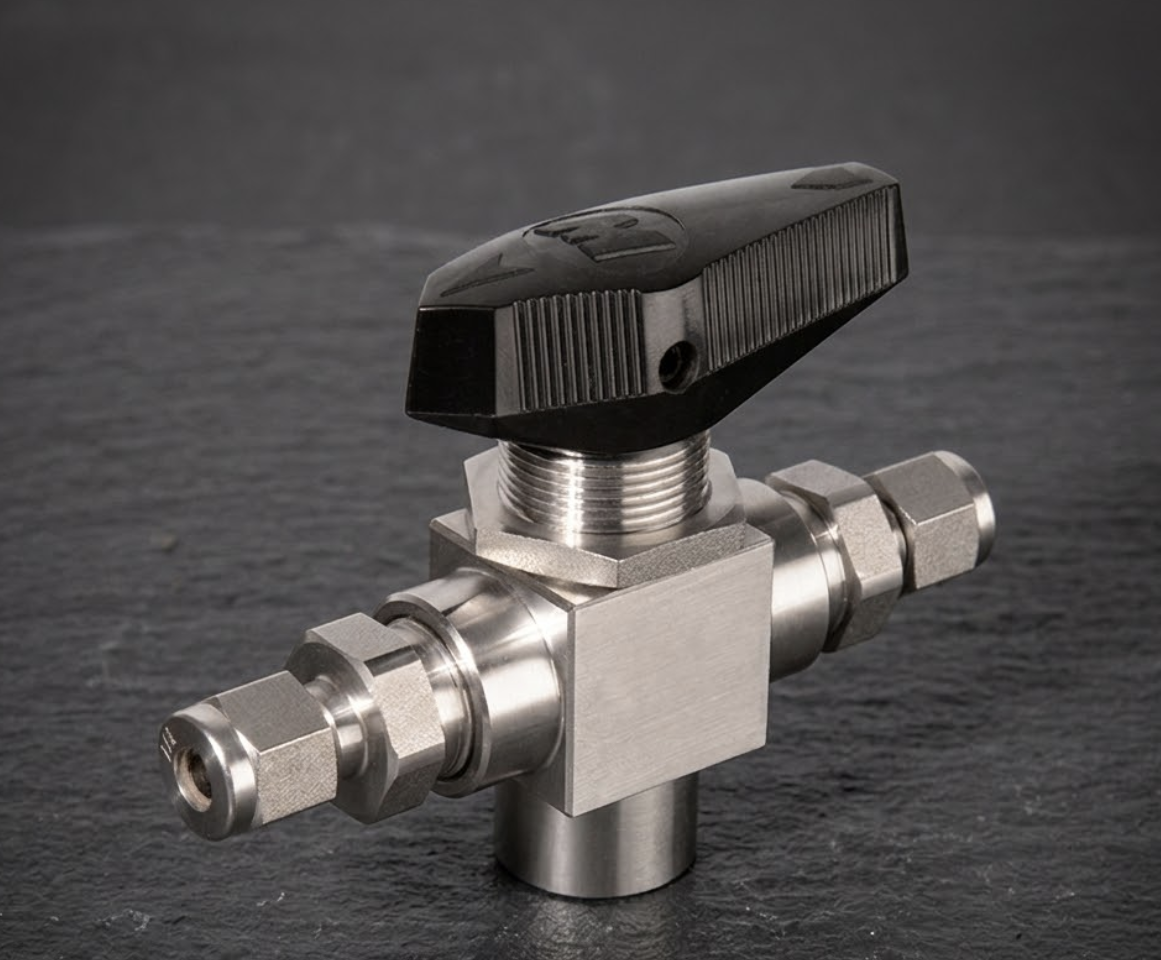
ROKE's TEE Double Ferrule Metric Trunnion Ball Valves, the THB Series, addresses each benchmark with measurable engineering parameters. The body material is SS316 stainless steel — a grade selected for its resistance to corrosion across oil, water, gas, and both corrosive and non-corrosive media. The rated working pressure reaches 10,000 PSI, with an operational temperature range spanning -18 degrees Celsius to 232 degrees Celsius. These figures cover the majority of instrumentation environments encountered in petroleum refining, power generation, and offshore engineering.
The sealing architecture relies on spring-loaded seats, which actively maintain contact pressure against the ball surface as the valve cycles. This design compensates for minor seat wear and sustains leak-tight integrity in both low- and high-pressure conditions — a critical advantage in systems subject to frequent pressure surges. The trunnion-style fixed ball eliminates axial float, which directly prevents ball blow-out under upstream pressure spikes. Additionally, each valve undergoes leak-tight performance testing at maximum working pressure using nitrogen before leaving the production facility. Size options cover the 3mm to 12mm metric tube range, with orifice dimensions and flow coefficients published for each configuration. This level of specification transparency allows engineers to cross-reference performance data before committing to a purchase order.
Direct-From-Factory Sourcing and What It Means for Quality Traceability
One structural difference between direct-factory procurement and distribution-channel purchasing involves traceability. When a manufacturer operates its own production facilities end-to-end, material batch records, dimensional inspection reports, and process certifications originate from a single accountable source. ROKE operates two self-managed factories with a combined footprint exceeding 1,000 square meters. The production infrastructure includes 20 automated lines generating over 2 million units monthly across its valve, fitting, and seamless tubing categories. At this output scale, automated tooling maintains dimensional consistency more reliably than manually adjusted processes — a factor that directly affects how replacement parts fit and perform in the field. For procurement teams managing long-term supply agreements, this consistency reduces qualification risk when reordering against established part numbers.
Certification as the Differentiator in Premium Valve Procurement
Technical specifications describe what a product does under controlled test conditions. Certifications describe what an independent third party confirmed after auditing both the product and the manufacturing environment. ROKE holds approvals from Bureau Veritas (BV), the American Bureau of Shipping (ABS), Det Norske Veritas (DNV), along with ISO quality management certification and CE conformity marking. The THB Series itself follows API manufacturing standards — a threshold that separates instrument-grade components from general industrial alternatives in oil and gas procurement frameworks. For procurement officers operating under regulated purchasing mandates, these credentials reduce internal qualification overhead. DNV and BV approvals carry particular weight in marine and offshore project specifications, where component selection often requires classification society acceptance before installation proceeds.
What Long-Term Partnership With a China-Based Factory Actually Looks Like
Skepticism toward China-sourced industrial components often rests on assumptions about quality variability and supply reliability — assumptions that the industrial component market has largely outgrown. ROKE holds independent export rights and maintains established trade channels across international markets. The company's foreign trade experience spans multiple sectors, including petroleum, chemical processing, electric power, shipbuilding, and water treatment. Wholesale pricing structures support bulk procurement, while direct access to material test records and inspection documentation enables buyers to meet internal traceability requirements without relying on intermediary-supplied paperwork. Moreover, direct manufacturer relationships offer a practical advantage when component specifications evolve — engineering change discussions happen at the source, rather than passing through distribution layers that may introduce delays or distortions. For industrial buyers evaluating a long-term supply partner rather than a single transaction, these structural features carry weight beyond the product datasheet.
The instrument ball valve market continues to consolidate around suppliers who can demonstrate verified performance at scale. ROKE's combination of high-pressure ratings, material traceability, third-party certification, and direct manufacturing access places the company in a competitive position — not through marketing claims, but through documentation that engineers can evaluate independently.
For product specifications and procurement inquiries, visit https://www.chinaroke.com/.
Nantong Roke Fluid Equipment Co., Ltd.
Nantong Roke Fluid Equipment Co., Ltd.
+86 513 8540 0443
admin@ntroke.com
Legal Disclaimer:
EIN Presswire provides this news content "as is" without warranty of any kind. We do not accept any responsibility or liability for the accuracy, content, images, videos, licenses, completeness, legality, or reliability of the information contained in this article. If you have any complaints or copyright issues related to this article, kindly contact the author above.
